Introduction
Crowd testing is a software testing approach where a distributed group of real users, rather than an in-house QA team, tests a product across a wide variety of devices, operating systems, and usage scenarios. The goal is to surface bugs that structured internal testing tends to miss, at a fraction of the cost of a dedicated test lab.
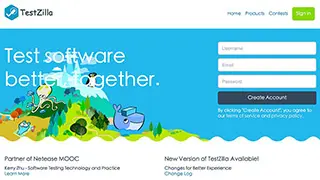
TestZilla is an open-source crowd testing platform designed to connect two parties: hunters (volunteer testers who find and report bugs) and developers (product owners who register their software and receive the reports). Hunters earn points for accepted reports, creating a lightweight incentive loop that encourages quality submissions. The project started as a Spring MVC application and was later fully rebuilt using the Phalcon framework to support a faster continuous delivery workflow.
The platform was adopted as a hands-on practice environment in Software testing methodologies and technical practices (软件测试方法和技术实践), a MOOC produced by Tongji University and offered on NetEase Cloud Classroom. Students were directed to testzilla.org in the course’s introductory section to complement theory lectures with real-world testing practice.
How It Works
The platform is organized around three concepts:
Products are the software items registered for testing. Developers create a product entry with a description, version, and category. Products are browsable through a searchable catalog, with multi-language metadata support so the same product can be described for different regional audiences.
Issues are bug reports submitted by hunters against a specific product and version. Each issue carries a category (e.g., functional, UI, compatibility) and a status that moves through a lifecycle as the developer reviews and responds. Developers see all issues submitted to their products in a dedicated inbox; hunters track their own submission history in a separate dashboard view. Both parties can leave threaded replies on any issue.
Points are awarded to hunters when their reports are accepted, following a configurable rule set stored in the database. The points log provides a record of each transaction, giving hunters a visible measure of their contribution.
Screenshots



The Disqus comment system is loading ...
If the message does not appear, please check your Disqus configuration.